
What Goes Up Won’t Come Down
Dump trucks are a familiar sight around Mesa, hauling dirt, gravel, and construction materials from one jobsite to another. But when a dump bed gets stuck halfway up, a truck that’s built to handle heavy work can suddenly become a difficult piece of equipment to move. Even with a tow truck.
Dump trucks are built to raise heavy loads, unload material, and get back to work. But when the bed refuses to lower, an ordinary breakdown can become a much bigger problem. For Mesa dump truck towing, a truck with its bed stuck in the air raises questions about height, stability, and whether we can move it in that condition.
An engine failure is one thing. A dump truck sitting on the roadside with its bed halfway up is something else entirely. Before we even think about hooking up a wrecker, we need to understand why that bed is still raised.
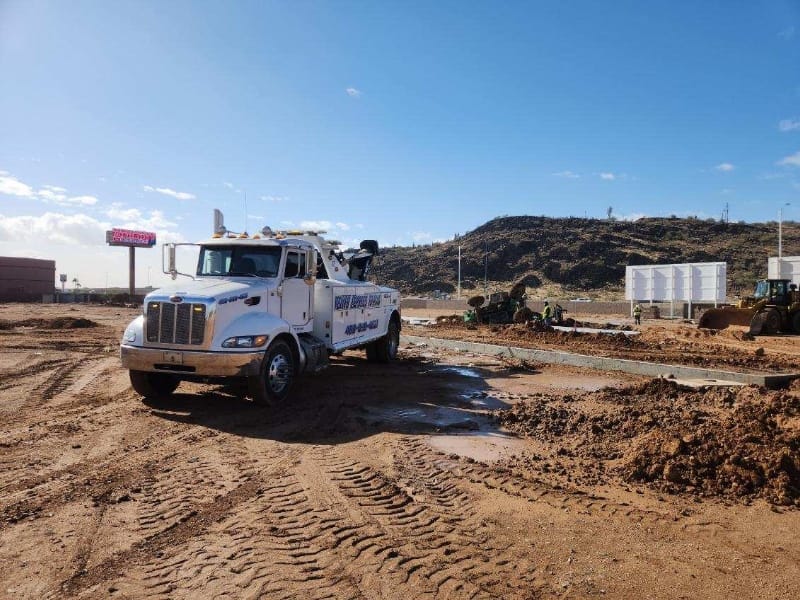
That’s a Lot of Truck Sticking Up
A dump truck is already a large vehicle. Raise the bed, and its dimensions change dramatically.
The top of the bed may extend far above the truck’s normal height. That creates problems around bridges, overhead wires, signs, and other structures. Even a short trip could involve obstacles the truck would normally pass beneath without a second thought.
There’s also the question of balance.
A raised bed changes the truck’s center of gravity. If the bed is tilted, damaged, or carrying material that hasn’t fully unloaded, the situation can be even less predictable. We have to account for the possibility of unexpected movement while preparing the truck.
Why Is the Bed Still Raised?
There isn’t just one reason a dump bed might get stuck. The problem could involve the hydraulic system, a mechanical failure, or damage sustained during an accident.
A hydraulic cylinder may be damaged, a control may malfunction, or a component may prevent the bed from lowering normally. Sometimes the bed itself is bent or obstructed.
Whatever the cause, forcing it down isn’t necessarily the answer.
A raised dump bed can hold tremendous weight, and hydraulic pressure can remain trapped in the system. We have to consider that stored energy and the possibility of sudden movement. Working beneath an unsupported bed is especially dangerous.
We need to understand the problem before attempting to change the bed’s position.
First, Make the Truck Ready to Move
Our job isn’t simply to find a wrecker strong enough to pull the dump truck. We need to determine whether it can be placed in a condition suitable for transportation.
Depending on the damage, we may need to coordinate with qualified repair personnel to stabilize the bed, address the hydraulic problem, or arrange additional recovery support. Sometimes the bed needs to be lowered or otherwise secured before towing can proceed.
For dump truck recovery in Mesa, we look at several things:
- Bed position: How high is it, and can it be lowered?
- Hydraulic condition: Is there damage or trapped pressure?
- Remaining material: Is there still a load inside the bed?
- Truck stability: Has the raised bed affected the truck’s balance?
- Structural damage: Are the bed, frame, or mounting points compromised?
- Overhead clearance: What obstacles are near the truck?
Those answers determine how we approach heavy-duty dump truck towing in Mesa. A standard hookup isn’t much use if the truck still has an unsecured bed towering above the cab.
The Route Becomes Part of the Problem
Even after we’ve addressed the raised bed, the truck’s condition may limit how we can transport it.
With Mesa heavy-duty truck recovery, we have to think about the entire trip. Roadway clearance, turns, pavement changes, and access to the destination can all matter, especially if damaged equipment prevents the truck from returning to its normal dimensions.
A dump truck with a lowered, secured bed is a very different transportation problem from one that cannot be brought back into its normal position.
That’s why dump truck towing around Mesa starts with understanding the equipment, not just choosing the shortest route to a repair facility.
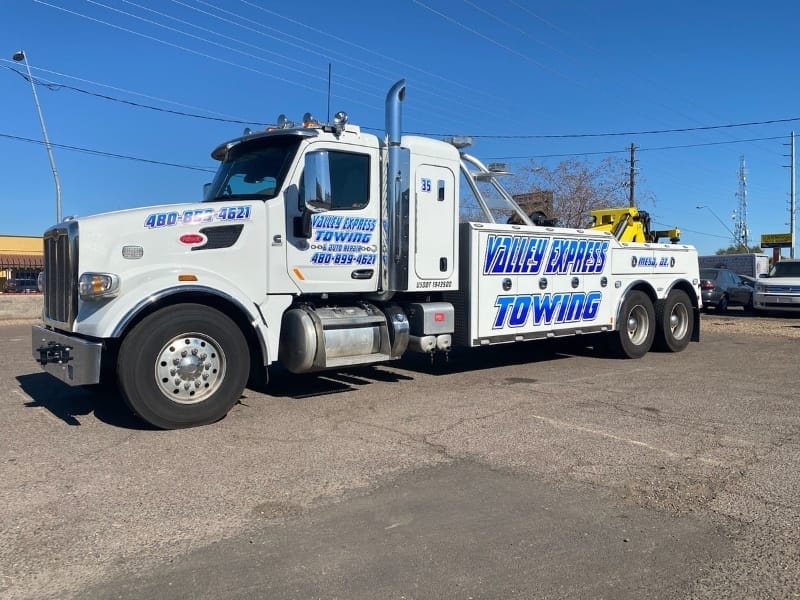
Valley Express Towing: Mesa Dump Truck Towing Done By Experts
At Valley Express Towing, we’ve been serving Mesa, Phoenix, and surrounding Arizona communities since 1994. Over the years, we’ve built a fleet of 22 trucks to handle everything from everyday breakdowns to heavy-duty towing and recovery.
Our heavy-duty equipment includes a 60-ton rotator, a 50-ton wrecker, a 35-ton wrecker, and a 25-ton wrecker. We also have a 16-ton medium-duty wrecker. That range of equipment gives us options when a large commercial truck needs more than a conventional tow.
Our drivers receive in-house training and have experience handling heavy-duty vehicles. For Mesa dump truck towing, we understand that a raised or damaged bed changes the questions we need to answer before the truck can leave the scene. We assess the situation, consider the equipment’s condition, and work out an appropriate recovery and towing approach.
Frequently Asked Questions
Can a dump truck be towed with its bed raised?
A raised bed can create serious stability and overhead-clearance hazards. We need to assess the truck, and the bed may have to be lowered or otherwise secured before transportation is possible.
What causes a dump truck bed to get stuck in the air?
Hydraulic malfunctions, damaged cylinders, mechanical failures, or structural damage can prevent a bed from lowering. The exact cause needs to be diagnosed.
Is it dangerous to stand under a raised dump bed?
Yes. An unsupported bed can fall unexpectedly, and hydraulic components may contain stored pressure. Nobody should work beneath it without appropriate mechanical support and safety procedures.
Can a rotator help recover a dump truck?
A heavy-duty rotator may be useful for certain lifting or recovery operations. Whether we use one depends on the truck’s condition, weight, position, and the recovery plan.
Does the load inside the dump bed matter?
Absolutely. Remaining material can affect weight distribution and stability, particularly if the bed is raised or tilted.
What happens if the dump bed cannot be lowered?
We may need to coordinate additional stabilization, repair work, or a different recovery arrangement before transporting the truck. The approach depends on the damage and conditions at the scene.