
The Tire That Shreds
A tire makes up only about 9-10% of your truck’s total mass. But let it fail, and it can bring 100% of your trip to a halt. The driver hears the pop, feels the rig pull right, and tries to keep the truck straight while coasting onto the shoulder. By the time we arrive, the rubber is scattered across two lanes and the rim had dug into the asphalt. That driver did everything right in the first ten seconds. A lot of others do not. A blown tire on a loaded semi can pull the whole rig sideways before the driver can react. The sound is loud, the wheel jerks hard, and the truck does not stop quickly. On US-60 semi towing calls, we see the difference between a controlled stop and a wreck come down to what the driver does in that first moment.
The best move is usually to hold the wheel steady, stay off the brake pedal, and let the truck slow down on its own. A sudden brake application can make a loaded trailer swing or push the tractor into traffic.
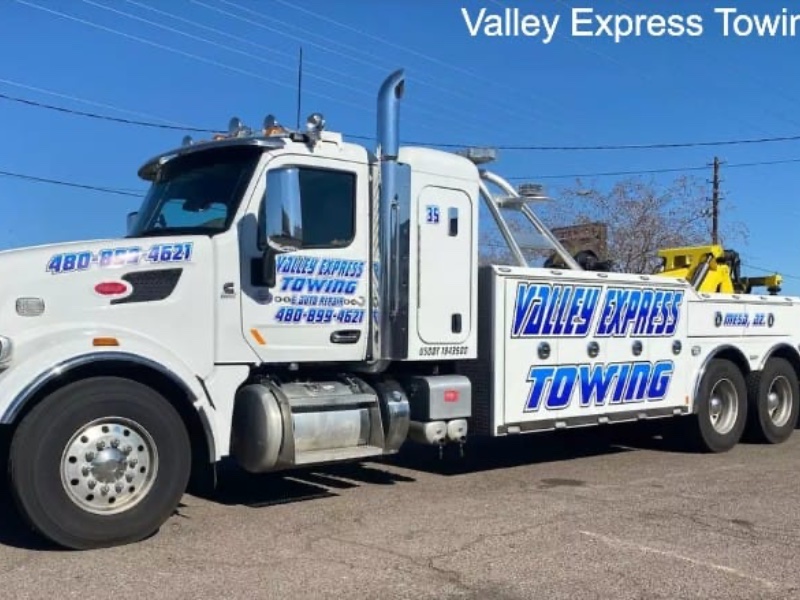
Why Semi Tires Fail on Arizona Roads
Heat is the biggest factor. Arizona pavement gets hot enough to crack an egg, and tires run even hotter. An underinflated tire flexes more, builds more heat, and can fail without warning. Old casings, road debris, overloaded axles, and long stretches of highway speed all add to the risk.
We have seen tires blow out on US-60 near Mesa Drive, Apache Junction, and the Superstition Freeway during the hottest part of the day. A tire that looks fine in the morning can shred by mid-afternoon if the air pressure is low and the load is heavy. Speed makes weak spots worse. A small cut or bulge that might hold up at 55 can let go at 70.
What Drivers Should Do Right After the Blowout
The goal is to get the truck out of traffic and onto a safe shoulder. Ease off the throttle. Keep the rig straight. Move right only when there is room. Turn on the flashers early so other drivers see the problem. Once stopped, set triangles if it is safe to do so and stay away from the travel lanes.
We need details that help us send the right truck the first time. We ask for the mile marker or nearest crossroad, direction of travel, tire position, trailer type, load status, and whether the truck can still build air pressure. A drive tire blowout may need roadside service. A steer tire failure with fender, brake line, or suspension damage may need a heavy tow.
What Makes the Call Worse
A driver should not slam the brakes, yank the wheel, or try to limp too far on a shredded tire. Those moves can turn tire damage into body damage, brake damage, airline damage, or a fire. We often see the most expensive part of the recovery come from what happened after the tire failed, not the blowout itself.
What Not To Do After a Tire Lets Go
Do not drive on loose rubber. Do not get out and walk around the truck if traffic is still moving beside you. Don’t guess whether the brakes are damaged. And do not assume the rim or axle is fine just because the truck is still upright.
A quick list helps:
- Stay out of live lanes
- Keep clear of moving traffic
- Do not drive on shredded rubber
- Stay off the shoulder if the ground looks soft
- Do not guess on brake damage
- Stop if the rim or axle looks bent
US-60 semi towing calls can change fast when traffic, heat, cargo, and damaged rubber all stack up in one place. If a tire tears into mudflaps, lights, fairings, air lines, or wiring, the truck may need more than a tire change before it can leave. We have seen blowouts that looked minor turn into full recoveries because the driver kept moving after the tire failed.
When a Tire Change Turns Into a Heavy Tow
A clean tire failure may only need a service truck. A blowout with rim damage, locked brakes, broken suspension, or a disabled tractor is a different call. Semi towing comes into play when the truck cannot move under its own power or when moving it farther would cause more damage.
We look at the tire position, shoulder width, cargo weight, traffic flow, and the next safe destination before hooking up. Sometimes the trailer stays put while the tractor goes for repair. Sometimes the whole combination needs to move together. On US-60 semi towing calls, that depends on the load, the damage, and what the fleet needs next. A rushed decision can create a second tow or leave a loaded trailer sitting in a bad spot.
How We Size Up the Damage
We ask the driver to describe what they see and hear. If the brakes are smoking, the rim is bent, the suspension is sagging, or the axle is dragging, the truck is not going anywhere on its own. If the tire shredded and took out wiring, air lines, or body panels, we need to know that before we send a service truck.
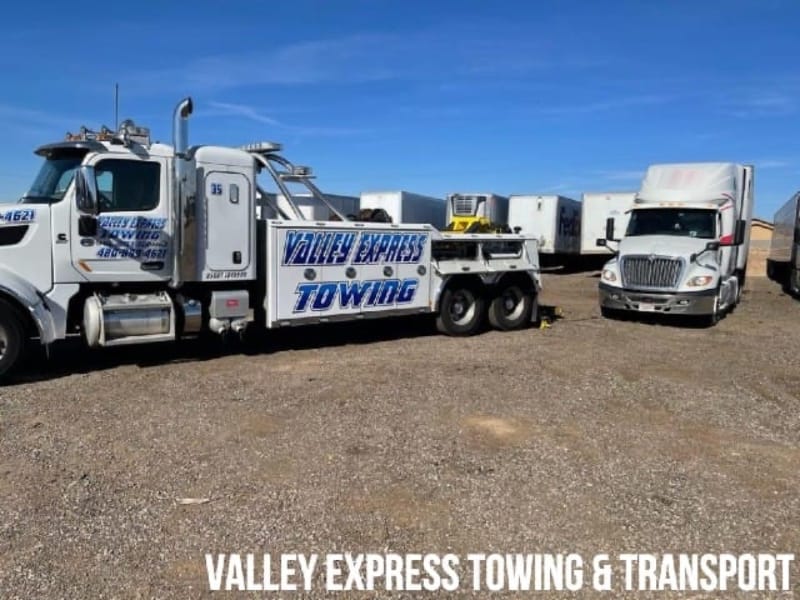
Valley Express Towing Handles US-60 Semi Towing After Tire Failures
Valley Express Towing has been serving Mesa, Phoenix, and surrounding Arizona areas since 1994. We operate 24 hours a day, 7 days a week, 365 days a year because tire failures do not wait for shop hours. Our fleet includes 4 heavy-duty trucks, including a 60 ton rotator, 50 ton wrecker, 35 ton wrecker, and 25 ton wrecker, which means we can handle US-60 semi towing calls that involve loaded trailers, damaged tractors, or both.
Our dispatchers ask the questions that point to the right truck, service unit, or recovery response. US-60 semi towing after a blowout may start with a shredded tire, but the real job is getting the driver, the truck, and the load to the next safe step without making the damage worse. We work with local law enforcement, including the Mesa Police Department, Department of Public Safety, Gilbert Police Department, and Maricopa County Sheriff’s Office, which helps us respond quickly and clear the roadway without adding to the traffic backup.
FAQ
Hold the wheel steady and let the truck slow down on its own. Do not hit the brakes hard or yank the wheel. Move to the shoulder only when there is room. A steer tire blowout can pull the whole rig sideways if the driver reacts too fast.
Yes. Shredded rubber can tear into mudflaps, lights, air lines, and wiring. A blown tire can also damage the rim, brake components, or suspension if the driver keeps moving after the failure.
It depends on traffic, location, and the type of truck needed. Most calls on Arizona highways take 20 to 45 minutes from dispatch to arrival.
Not if traffic is still moving beside the truck. Changing a tire on a busy shoulder is dangerous. If the shoulder is narrow or the traffic is heavy, the safer move is to call for roadside service or a tow.
Most commercial auto policies include towing and roadside assistance, but coverage limits vary by carrier and policy type. Drivers should check their policy or have dispatch confirm coverage details before service begins, especially for heavy-duty recovery involving a wrecker or rotator.
Location (mile marker or nearest exit), direction of travel, whether the trailer is loaded, and the nature of the damage (blown tire only, or additional damage to the tractor). This lets dispatch send the right truck the first time instead of a second call for a bigger unit.